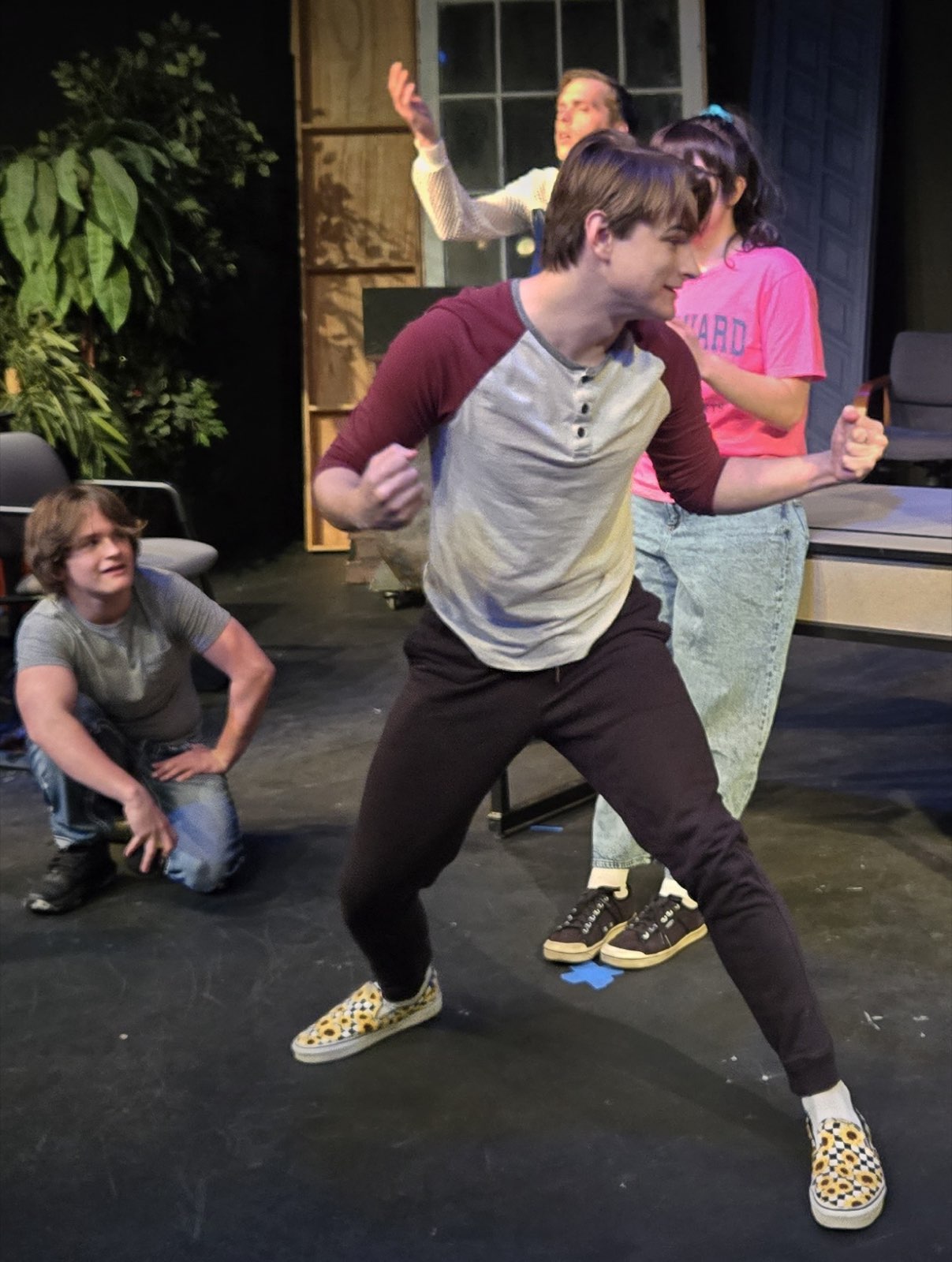
What happens.

Mr. Ross urges his drama students to dig deep, speak from the heart, and embrace the chaos of creativity. But one day the chaos spins a bit out of control, and Ross snaps an inappropriate comment at a disruptive student. The next morning, a parent hears about it and files a complaint, which quickly snowballs into a formal administrative inquiry. One by one, every student in the advanced drama class is pulled into the office and questioned. The grilling fails to uncover any serious misconduct (because there is none), but there is some unanticipated fallout when Hope (Ross's advanced drama TA) tries to defend Ross by pointing out how much she loves his class because it's the only place on campus where it feels safe to be herself. "It's the only class I have with other gay kids," she says. This tribute to Ross's welcoming classroom atmosphere ripples through the whole school, and triggers a new district policy requiring the school to inform Hope's parents, within 72 hours, that she "believes she's gay."

Hope's classmates protest passionately and brainstorm ways to circumvent district policy and protect Hope's privacy. After several terrible ideas, they finally hit upon a creative and effective way to push back — launching a TikTok challenge that strikes at the heart of the school's policy and brings the administrative office grinding to a halt. Inspired by the students' courage and moral clarity, Ms. Hewitt (the assistant principal) digs in her heels and refuses to out Hope to her father — leaving the principal to do the dirty work himself.

As Ross's long workday comes to a close, the drama department has lost two students, forcing the cancellation of the spring production; the TikTok ringleaders have been threatened with expulsion; Hope's father has made plans to enroll her in his church's conversion therapy program; Ms. Hewitt has been fired for insubordination and violation of district policy; and Ross himself — once the steadiest adult in the building — has violated district policy and state law, risking both termination and jail time, to help Hope escape conversion therapy by running away from home.

All this from one careless comment in class the day before.

And yet somehow, the ending feels optimistic. Hopeful. How do we pull that off? You're very welcome to read the play and see for yourself.

What it's really about.

Play It Straight explores the effects of political agendas imposed upon our public schools, and the consequences-both intended and otherwise-for our children and families.

Play It Straight examines the complex roles our public school teachers routinely find themselves filling for our children: Mentor, Referee, Social conscience, Refuge, Trusted ally, Role Model, Confident, Human Shield...

Play It Straight  is about the cost of personal honesty and integrity- and the extraordinary courage it sometimes takes to be truly yourself.

Audience for Play It Straight

01
Concerned Citizens
Anyone paying attention to what's happening in American public education.
02
Education Community
Students, parents, teachers, administrators, and school boards.
03
LGBTQ+ Community
Members, allies, and organizations that support them.
04
High School Arts Students
Current and former — especially anyone who's found a refuge and a home-away-from-home in an arts classroom, be it Drawing, Painting, Poetry, Creative Writing, Dance, Choir, Band, or Drama. If you know, you know.
05
Theatre Artists
Playwrights, directors, actors, designers, and educators.

Built for your program.

Who Can Produce This Play?

Professional and amateur theaters, universities, colleges, community colleges, and courageous high school theater programs.

Note: meaty roles for adults and students alike make Play It Straight a particularly good fit for professional theaters with an educational component looking to showcase a few strong young actors.

Request a Perusal Script →

By the Numbers

Ensemble
10+4 adults-6+ students
Runtime
110minutes, two acts
Staging
Oneflexible school unit

Know before
you produce.

This play contains strong language, homophobic slurs, discussion of conversion therapy, political extremism themes, accusations of misconduct, and mature discussions of sexuality and identity.

Organizations are encouraged to engage thoughtfully with the play's themes. Production approval is handled directly and collaboratively to support organizations in presenting the work responsibly and successfully.

We encourage the use of Play It Straight to support organizations which support members of the LGBTQ+ community.

Three writers. One play.

Richard Winters
Playwright

Richard Winters, drawing on his decades of experience as a Drama and English teacher in California public high schools, hosts a series of off-campus improv/writing workshops with a small group of his Drama students. The plan: write a comedy based on a funny story he used to tell at parties — about the time a careless comment to a disruptive student sparked an investigation into his conduct and classroom management style, and led to an official reprimand, and one of his worst-ever days at work.

Kerri Yund
Playwright

Kerri Yund, a former student of Richard's, stays with the project, and the writing continues. The forcible outing of Hope to her father in adherence to district policy is Kerri's suggestion, based on similar policies which exist in many states where right wing Christian nationalists have infiltrated local school boards. The tone of the play turns darker. It's no longer a comedy. Although Kerri's family does not closely resemble Hope's family, Hope's storyline is heavily influenced and informed by Kerri's lived experience witnessing students taking refuge in the place where they felt safest — in Richard Winters' Drama class. After high school, Kerri went on to edit the FEM at UCLA, and is now a First Grade teacher in Sacramento. She credits Richard as a major influence in her decision to become an educator.

Gary Wright
Playwright

Gary Wright, long-time friend and theatre colleague of Richard's, and a seasoned writer with play commissions from Foothill Theatre Company, Sacramento Theatre Company, Arizona Theatre Matters, and the Palo Alto Childrens' Theatre, comes aboard to lead the next phase of the work. From here on, the mission is character development, and experimenting with different variations of the second act. We wrote a lot of endings we didn't like. The second half got very complicated and very dark for a while there. Finally, simplifying and focusing Act Two on everyone finding their power and pushing back against oppression was Gary's idea — inspired by yet another funny story from Richard's long and eventful teaching career.